Tamil Nadu MLAs Adopt Undercover Tactics to Combat Corruption
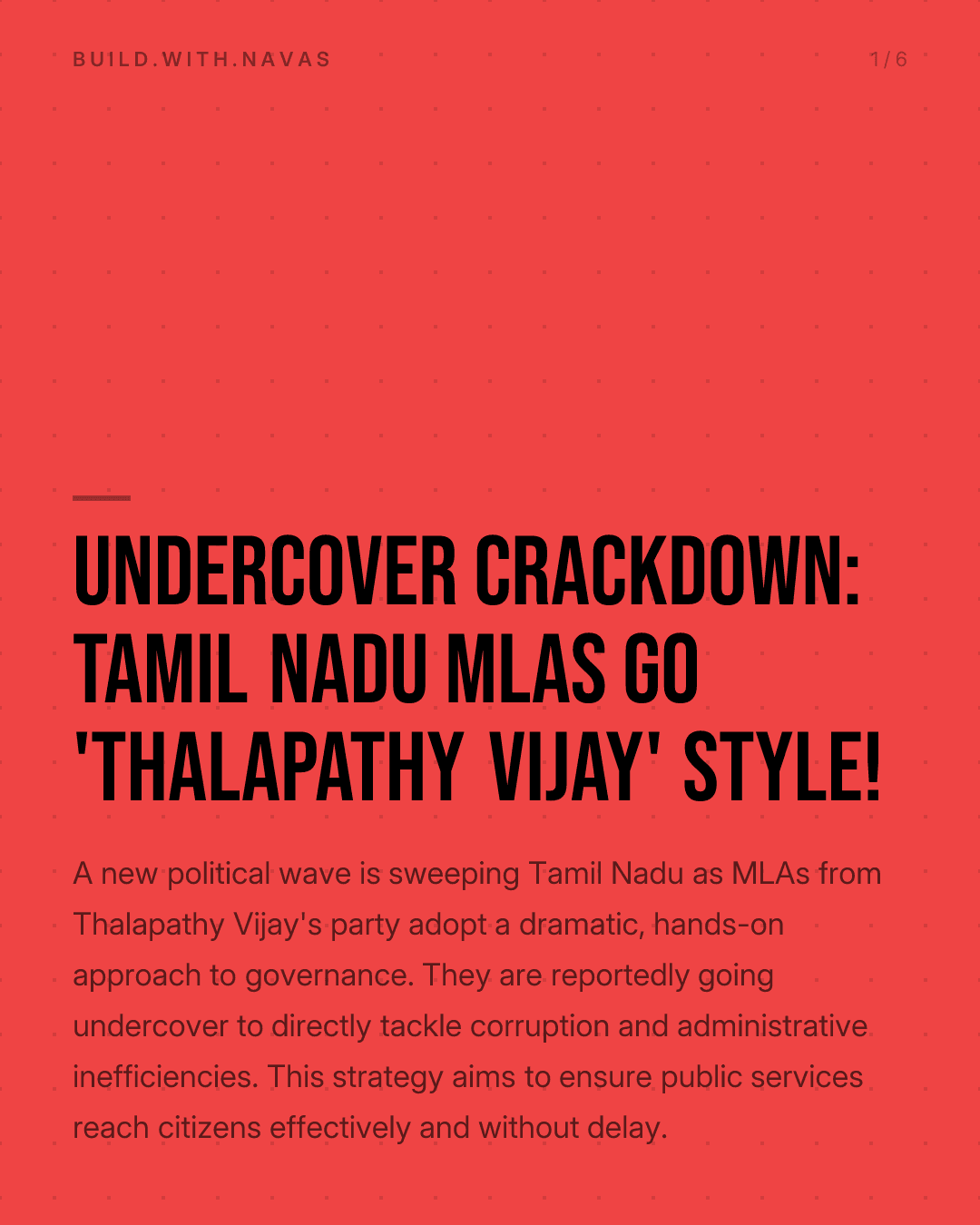
A new political wave is emerging in Tamil Nadu as Members of the Legislative Assembly (MLAs) from the recently formed Tamizhaga Vetri Kazhagam (TVK) party are reportedly employing undercover tactics to address governance issues. This hands-on strategy aims to directly confront corruption and administrative inefficiencies, ensuring that public services reach citizens effectively and without delay. The approach signals a departure from traditional political engagement, with a focus on direct intervention and immediate accountability.
Tamizhaga Vetri Kazhagam: Aims and Approach
Founded by popular actor 'Thalapathy' Vijay, the Tamizhaga Vetri Kazhagam (TVK) has positioned itself to contest the upcoming 2026 Tamil Nadu assembly elections. The party's stated objective is to introduce a fresh perspective to state politics, emphasizing direct action and a citizen-centric governance model. Their recent activities, characterized by undercover operations, offer a preview of the party's operational style and commitment to immediate problem-solving.
Direct Intervention: 'Gloves in an Hour, or License Gone!'
One notable incident highlights the TVK's assertive approach: an MLA reportedly confronted an official regarding the absence of safety gloves for sanitation workers. The official was issued a stern ultimatum, demanding the provision of gloves within a strict one-hour timeframe, with the threat of license revocation if the directive was not met. This swift and decisive action exemplifies the party's commitment to enforcing immediate accountability and addressing critical issues impacting public service workers.
Bypassing Bureaucracy to Fight Malpractice
TVK MLAs are utilizing undercover methods to circumvent bureaucratic obstacles and expose corruption at the grassroots level. This strategy allows them to directly observe the challenges faced by ordinary citizens and identify deficiencies in public service delivery. The ultimate goal is to facilitate immediate change and deter corrupt practices by demonstrating a clear and present oversight mechanism. This approach seeks to foster a more responsive and transparent governance system.