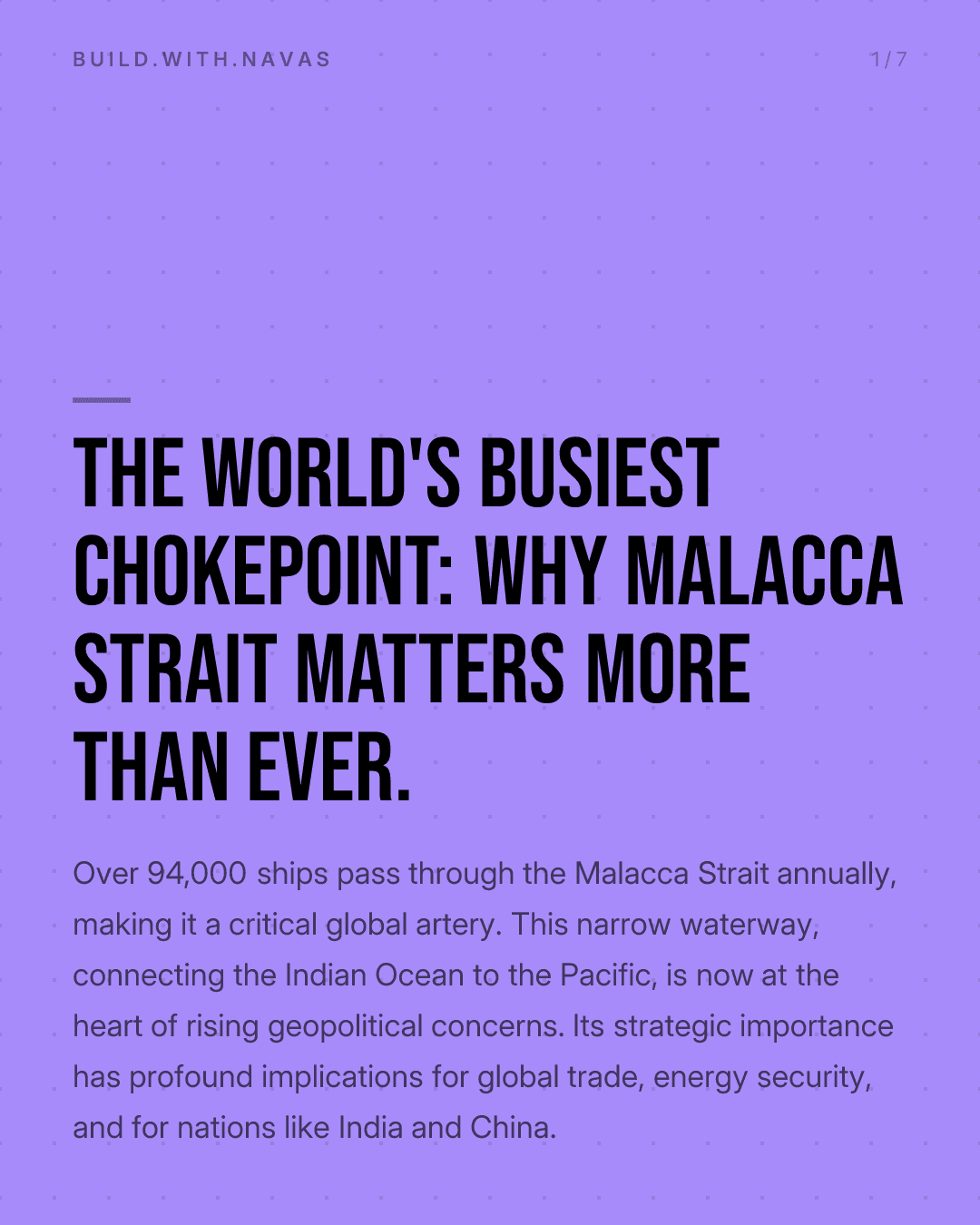
Malacca Strait: A Critical Global Artery Facing Rising Geopolitical Tensions
The Strait of Malacca, a narrow waterway connecting the Indian Ocean and the Pacific, has become a focal point of increasing geopolitical concern due to its indispensable role in global commerce. Annually, over 94,000 ships navigate this vital artery, underscoring its significance as a critical global chokepoint. Its strategic importance directly impacts global trade, energy security, and the interests of major powers like India and China.
The Strategic Significance of a Natural Bottleneck
Stretching approximately 800 kilometers between the Malay Peninsula and the Indonesian island of Sumatra, the Strait of Malacca is one of the world's most crucial shipping lanes. This natural bottleneck serves as a vital maritime shortcut, significantly reducing journey times for international trade. It is the primary sea route for oil and goods destined for East Asian economies, including China, Japan, and South Korea, carrying approximately one-third of global trade and over half of the world's seaborne oil shipments.
Impact on Major Asian Economies and Security Concerns
For China, the strait represents a significant vulnerability, often referred to as its 'Malacca Dilemma.' The nation's heavy reliance on the strait for energy imports and trade raises concerns about potential blockades in times of conflict, which could cripple its economy and energy supply. This anxiety has spurred China's efforts to develop alternative trade routes and enhance its naval capabilities. India, too, has a critical interest in the Strait of Malacca, which is vital for its trade with Southeast and East Asia, particularly for crude oil imports. Maintaining stability and freedom of navigation in the region is paramount for India, whose growing maritime presence in the Indian Ocean positions it as a key stakeholder in the strait's security.