Paytm Introduces 'Pocket Money' Feature for Teenagers, Streamlining Digital Payments
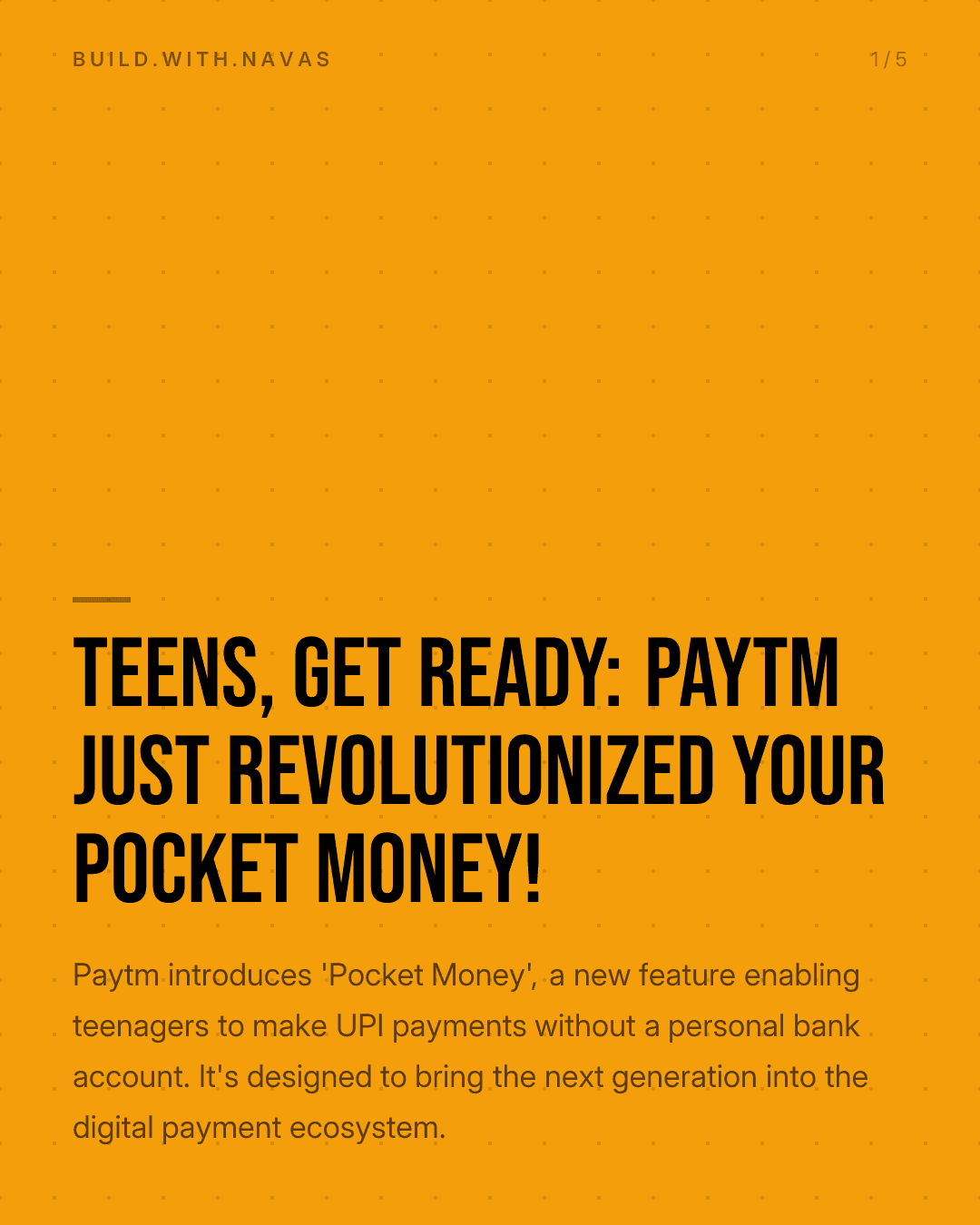
Paytm has launched a new feature named 'Pocket Money,' designed to bring teenagers into the digital payment ecosystem by enabling them to make UPI (Unified Payments Interface) transactions without requiring a personal bank account. This innovation aims to equip the next generation with early access to digital financial tools, bridging a gap that previously necessitated a formal banking relationship for such transactions. The feature is set to revolutionize how young people manage and spend their allowances, making digital payments a seamless part of their daily lives.
UPI Access for Minors Through NPCI's UPI Circle
Leveraging the capabilities of NPCI’s UPI Circle, the 'Pocket Money' feature empowers teenagers to conduct various transactions, from paying at school canteens to using public transport like metro services. This functionality removes a significant barrier to digital payment adoption for minors, as it bypasses the prerequisite of opening and maintaining a full-fledged bank account. This move is a direct response to the growing demand for accessible digital financial solutions for younger demographics in India.
Parental Controls Ensure Security and Financial Literacy
A key component of the 'Pocket Money' feature is robust parental oversight. Parents can link their own Paytm wallet to their teenager's account, granting them the ability to set monthly spending limits, which can be configured up to ₹15,000. Furthermore, the feature offers real-time transaction tracking, providing parents with complete visibility into their child's spending habits. This system is designed to foster responsible financial management and educate young users about budgeting within a secure, controlled environment.