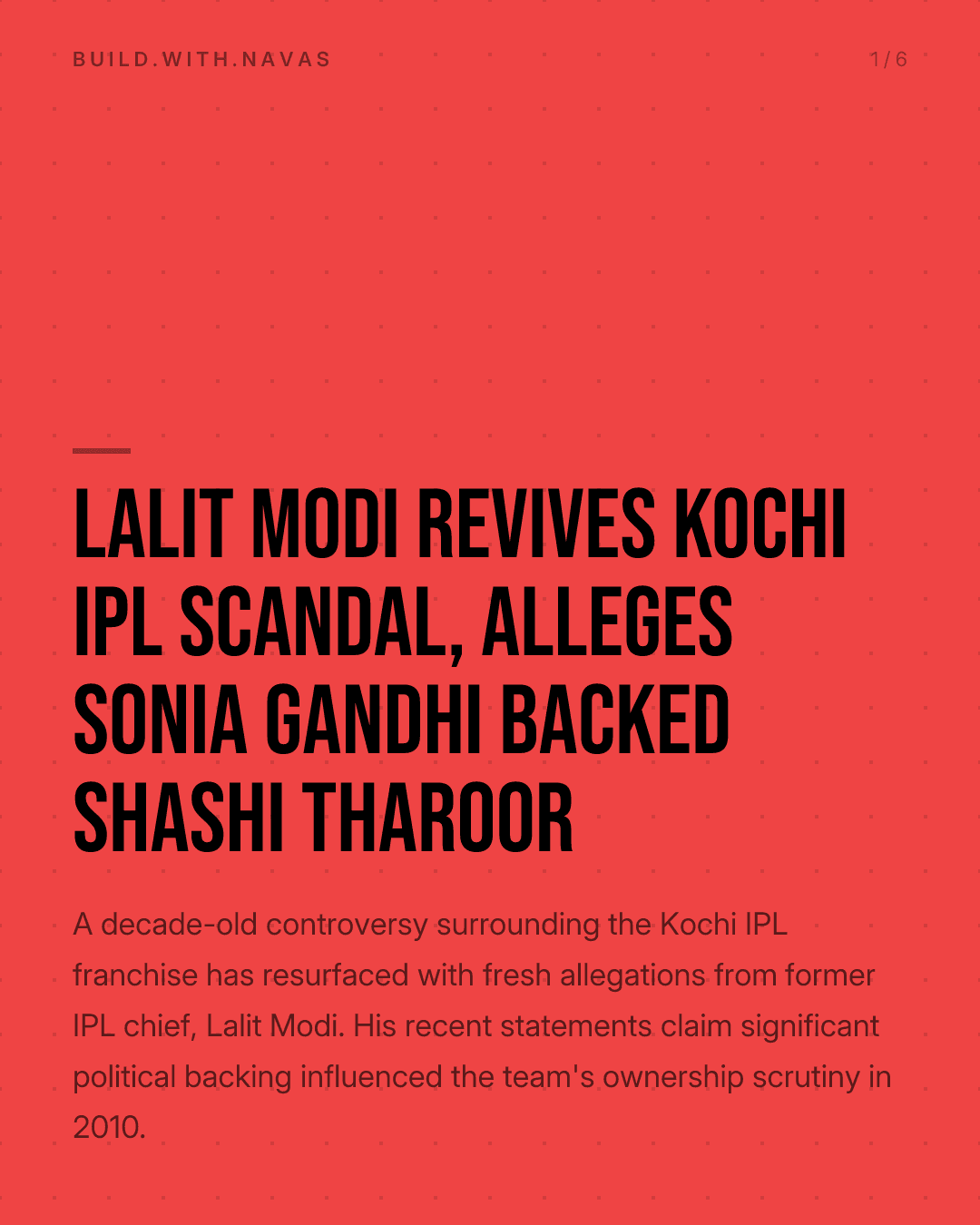
Lalit Modi Revives 2010 Kochi IPL Controversy with New Allegations
A decade-old controversy surrounding the Indian Premier League's (IPL) Kochi franchise has been reignited by former IPL chief Lalit Modi. In recent statements, Modi has leveled fresh allegations, claiming that significant political backing influenced the scrutiny of the Kochi Tuskers Kerala team's ownership in 2010. This resurfacing of the scandal casts a shadow on a period when the intersection of sports, business, and politics in India came under sharp focus.
Unpacking the Original 2010 Kochi IPL Scandal
The initial controversy erupted in 2010 over the complex ownership structure of the newly formed Kochi Tuskers Kerala franchise. Central to the dispute were questions surrounding the involvement of Sunanda Pushkar, who was then the wife of the Union Minister of State for External Affairs, Shashi Tharoor. Lalit Modi, serving as the IPL Chairman at the time, specifically questioned the 'free equity' reportedly offered to Pushkar, which subsequently escalated the issue and led to broader investigations into the franchise's financial dealings and governance.
Modi Alleges Political Pressure and Sonia Gandhi's Involvement
According to Lalit Modi's recent statements, his investigation into the Kochi franchise's ownership structure was met with considerable political pressure from high-ranking officials. He has now directly alleged that Sonia Gandhi provided support to Shashi Tharoor during the controversy. Modi claims that this political influence was strategically deployed to shield Tharoor from the intense scrutiny that the ownership issues were generating at the time.